Monday, September 3, 2012

Living for one's soul


in The New York Times last night,
and I thought of a man who has
lived for his soul. It was how we
were taught to create our work, 
without putting it into so many
words. It has been a magnificent,
fortunate weekend: there is the
exciting new study of James, and
a revival of a beautiful life of
Horace, by a traveling friend of
Chatwin's. Theirs are voices that
will go on forever, and have fig-
ured continuously here, inexhaus-
tible as they are.

The Fall will be rich, with such
resources, and not taken from us;
you can feel the gathering in the
scent of the page, the scratch of
the nib in the notebook of "the
gentleman scholar," the burn of a
passable Sherry in a preceptor's
study, hexameters unraveling em-
bedded warmth of daytimes to re-
member. 


And now in a short piece, Michael 
Graves has written so well of the 
recklessness of our pursuit of the 
humane communion, as an extract of 
the human hand. This, in answer to
Horace's doubt of purpose in his
ode to a wealthy lawyer, Torquatus,
is one of the prettiest things I
have read in a long time, I am not
surprised to say.


   i.
   Who knows whether tomorrow the gods will have
   Anything more to give than they have given?
   What you can give to your own dear heart today
   Will not fall into the clutch of your heir tomorrow.

   ii.
   Who knows if Jove who counts our score
   Will toss us in a morning more?
   What with your friend you nobly share
   At least you rescue from your heir.

   iii.
   Torquatus, if the gods in heaven shall add
   The morrow to the day, what tongue has told?
   Feast then thy heart, for what thy heart has had
   The fingers of no heir will ever hold.


Quis scit an adiciant hodiernae crastina summae
   tempora di superi?
Cuncta manus avidas fugient heredis, amico
   quae dederis animo.


ii   George King

iii  Michael Graves
      Temple of Juno, Paestum

Michael Graves
Architecture and the Lost Art
  of Drawing
The New York Times
September 1, 2012

Horace
  Ode to Torquatus
  iv, 7
Translation 
  David Ferry (i)
  op. cit.
  Samuel Johnson (ii)
  A.E. Housman (iii)

Peter Levi
Horace
  A Life
Duckworth, 1997©
I.B. Tauris & Co., Ltd, 2012©


Sunday, September 2, 2012

Aren't you glad you waited?


How well we know, it can't have been easy. Anything you want, they said, as if they saw you coming.


Something told you, this thing is going to get better, I just know it is, and I'll know when it's right for me.


     Good play. 


iv  Benjamin Eidem

Friday, August 31, 2012

Rutgers philosophy professor explains how It happens


      "the public's trust
      in public speech .. 


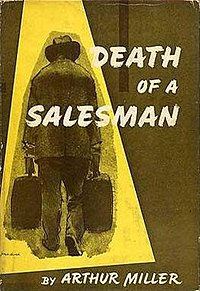
The argument had a grain of irony we expect in a Philosophy seminar, and most of the elegance of detachment required to play the skein out. But that it came on the heels of the best-received (and most condemned) oration of the week, and sought to explain how both these things could be possible, almost spared us the contortions of the candidate, entirely. We glanced, but with that frisson of despair mingled with fear that we had for Willy Loman. It became Friday, and we could pull off at the beach. Just to feel clean, can be very nice.


Thursday, August 30, 2012

Jewel of the Summer List


Recent comment here drew attention to endlessly seductive pleadings of the present heirs of two of England's more impor-tant country estates, and it is only natural to admire now a slender volume which traces the intricate but pleasingly irrevocable right of trespass, in effect, enjoyed by Englishmen through vast portions of these titled tracts.


We observe a bilious celebration of tracts of truly smelly selfishness this week in the United States, dis-reputable when they were published 4 generations ago and now so putrid as to draw only racist, nativist and misogynist theorists of the divine right of capital to attach itself to beasts. I refer, as I reasonably never thought I would have to do in adult-hood, to Friedrich Hayek's pathetic Road to Serfdom and Ayn Rand's second fattest masturbation guide, Atlas Shrugged. We are pretending that a candidate for our second highest office is a thinker and courageous, because he adores these texts.


In this hard week for the sharing of Nature's patrimony in the United States, it is amusing, pleasant and refreshing to pluck Sinclair McKay's Ramble On: The Story of our love for walking Britain from Heywood Hill's Summer List, and rusticate in the quietly unspoken 17th Century Commonwealthman roots of this nation's own commitments to a shared bounty, which it would unreasonably flatter these new Republicans to damn for forgetting. A book of humour not requiring someone to endure pain, a book embracing the land without having to rape it, on a pastime of human strengthening without having to exclude, is not likely to be read aloud this week in Tampa, Florida. 


But this is a keepsake of a reality, not a fantasy, of great charm, historic heroism, and inspiring infusions of invigorating air, terrain and vistas befitting the bedside of a republican Horace would recognise. Every chapter is a jewel of an excursion stripping vanity from the enthusiast, a toning of the sensibility that no ideology of ownership can confer. The republic of belonging, known to Horace's planter, Constable's shepherd, Clare's wanderer, and Woody Guthrie's Everyman is the defining entitlement which has distil-led these new Republicans into a cabal of irrational wrath against the rambler, the American Motor their candidate begs us to forget. Who will?


Sinclair McKay
Ramble On
Fourth Estate, 2012©


Wednesday, August 29, 2012

A toning


It's all a natural skep-ticism is, a property of the mind evolved from mere exertion into a vessel that cannot be had. 
Where does it come from, how do we know it, and what does it give in recompense and tried compassion, to demagogues of tired seductions?


              Isn't it wonderful, how they will 
              all say you are something special, 
              someone who can fend for yourself 
              but need them with you to do it?


  And what part of you
  did it seem to be,
  that needed this as-
  sistance of their ur-
  ging, that they could
  be trusted with it
  better than you?


Matas


Tuesday, August 28, 2012

Light work


  Via the topmost link in his blog's
  list of other pages to visit, I
  discovered a small portfolio of
  photographs of factory workers by
  the 20th Century master, Robert
  Doisneau, which naturally do put
  one in mind of Valéry Lorenzo's
  incessant explorations of the ac-
  tivity of light. It strikes me,
  his restlessness is somewhat like
  that of light, itself, unwitting
  and free in its associations, un-
  blinking in unsparing identifica-
  tion. Possibly, we contemplate a 
  boldness in any engagement with
  illumination: its impartiality.


ii   Purpose, 2009
iv   Valéry Lorenzo    
       Silver print photograph 


Monday, August 27, 2012

Stormy weather update


Since this morning's posting, other commentary from around the country has widely voiced the analysis given here, that Mr Romney's candidacy is taking depressing risks of rebuke for racism in strategy and conduct. This page enormously hopes this particular specter can be kept at bay in this campaign, because there is one very much like it, which has seemed ready for permanent rejection at last -- exemplified in the exotic speculations of Congressman Todd Akin, of which more another day. For this campaign, meanwhile, we hope that the candidates will exercise some responsibility toward those who still believe they must be Republican, to spare them excessive despair for what they do.